


 Deutsch
 English
 Español
 Français
 Nederlands
 Português


 Share
Share




In February 2026, the United States convened 54 nations in Washington, D.C., for the inaugural Critical Minerals Ministerial, unveiling the Forum on Resource Geostrategic Engagement (FORGE) — a plurilateral trade-and-investment bloc designed to break China's stranglehold on rare earth and cobalt refining. With $30 billion mobilized, 11 new bilateral framework agreements signed, and the launch of Project Vault, a $10 billion strategic reserve, the Trump administration has realigned global critical minerals supply chains in what experts call the most ambitious Western counter-coordination since the Cold War.
What Is FORGE and Why Was It Created?
FORGE replaces the Biden-era Minerals Security Partnership (MSP), which critics said lacked enforcement mechanisms and failed to attract sufficient private capital. The new forum, chaired by the Republic of Korea, establishes a preferential trade bloc with coordinated price floors — a mechanism Vice President JD Vance described as "reference prices acting as floors maintained through adjustable tariffs." The goal is to stabilize volatile markets where Chinese state-subsidized oversupply has repeatedly crushed Western mining and processing projects before they could scale.
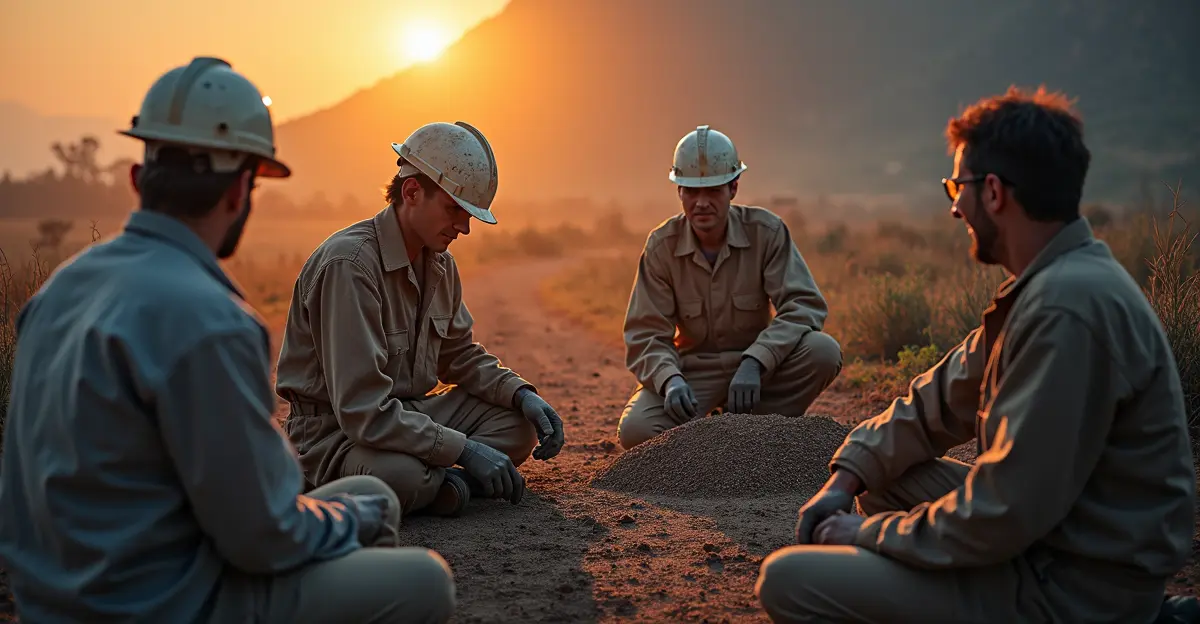
The urgency stems from China's near-total dominance: Beijing controls roughly 90% of global rare earth processing, 80% of tungsten, and 60% of antimony. In late 2025, China tightened export controls, imposing a re-export rule, a 0.1% de minimis threshold on Chinese-origin content, and effectively banning rare earths for military and sub-14nm semiconductor applications. Neodymium-praseodymium (NdPr) prices surged 89% year-on-year to nearly 997,500 CNY per ton, while prices outside China spiked sixfold. The International Energy Agency warned that up to $6.5 trillion of annual economic activity outside China could be at risk.
Project Vault: A $10 Billion Strategic Reserve
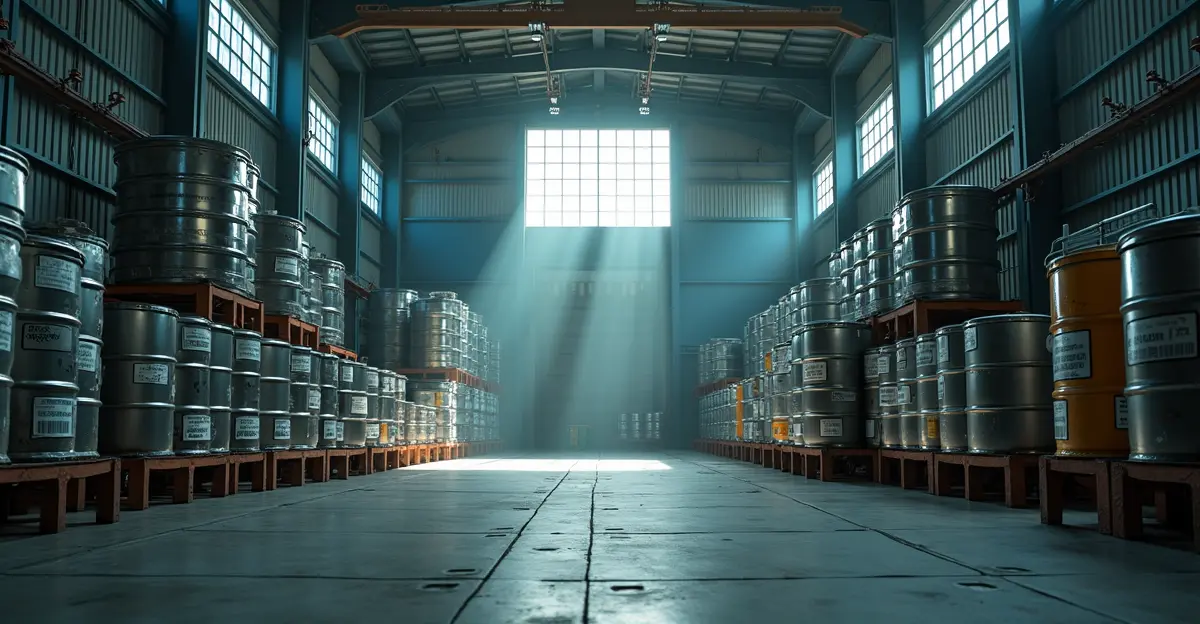
Alongside FORGE, President Trump announced Project Vault, a $10 billion Export-Import Bank (EXIM) Direct Loan to establish the U.S. Strategic Critical Minerals Reserve. The public-private partnership will store essential raw materials — including rare earth oxides, lithium, cobalt, and copper — in facilities across the United States. Initial participants include Clarios, GE Vernova, Western Digital, Boeing, Hartree Partners, Mercuria Americas, and Traxys. EXIM Chairman John Jovanovic stated the loan structure "delivers a net positive return for U.S. taxpayers" while shielding domestic manufacturers from supply shocks.
The reserve addresses a critical vulnerability: even with domestic mining capacity, the United States lacks sufficient processing capabilities for 12 critical minerals where it is 100% net-import reliant, and over 50% reliant for 29 others. A January 2026 presidential proclamation on processed critical minerals authorized negotiations with foreign nations and threatened tariffs if supply chain agreements are not reached.
The Bilateral Framework Agreements
The February 4 ministerial produced 11 new bilateral critical minerals framework agreements or memoranda of understanding with Argentina, Cook Islands, Ecuador, Guinea, Morocco, Paraguay, Peru, the Philippines, the UAE, the United Kingdom, and Uzbekistan. These build on 10 similar pacts signed in the preceding five months, bringing the total to 21 deals. Negotiations have been completed for 17 additional nations. The agreements cover joint investment, technology transfer, and offtake commitments — creating a web of preferential trade relationships designed to bypass Chinese-controlled processing hubs.
Saudi Arabia vs. UAE: The Middle East Processing Hub Race
A key subplot in the FORGE realignment is the emerging competition between Saudi Arabia and the United Arab Emirates to become the Middle East's critical minerals processing hub. Saudi Arabia's state mining company Ma'aden has invested $4 billion in commercial-scale refining at the Wa'ad Al Shammal zone, backed by amended mining laws and tax incentives under Vision 2030. The kingdom holds domestic reserves of heavy rare earth elements in the Arabian Shield valued at an estimated $2.5 trillion.
The UAE, lacking significant domestic mineral deposits, has positioned itself as a downstream processing and logistics hub, investing over $3 billion in lithium-ion recycling and rare earth separation plants at KIZAD and JAFZA zones. The UAE has also deployed over $110 billion in African mining investments (2019-2023), including a bid for Zambia's Mopani Copper mines. Both Gulf states offer patient capital and process engineering expertise from their hydrocarbon sectors, but face the challenge of competing with China's established monopoly and heavy subsidies. The GCC critical minerals localization strategy could see either or both nations emerge as FORGE-aligned processing alternatives within the decade.
Can FORGE Succeed Where Bilateral Efforts Stalled?
The critical question is whether FORGE's multilateral approach can overcome the structural barriers that have stymied previous Western efforts. Independent analysts note that rebuilding non-Chinese rare earth processing capacity will require 20-30 years and an estimated $15-25 billion in capital expenditure — far exceeding the current geopolitical window. China's export controls are designed not to create scarcity but to maintain pricing power and discourage alternatives through temporary, reversible restrictions.
FORGE's price floor mechanism is its most innovative — and controversial — feature. By establishing minimum reference prices enforced through adjustable tariffs on non-member imports, the bloc aims to guarantee returns for Western processors while undercutting China's ability to flood markets with subsidized supply. However, the mechanism risks WTO challenges and could raise costs for downstream industries like EV manufacturing and defense contracting. The USMCA renegotiation may provide a template for how such trade-distorting measures are managed within North America.
Expert Perspectives
"FORGE represents a recognition that bilateral deals alone cannot match the scale and coordination of China's state-directed industrial policy," said Dr. Emily Benson, director of the Critical Minerals Security Program at the Center for Strategic and International Studies. "The price floor mechanism is a bold experiment — if it works, it could transform the economics of Western processing. If it fails, it could fragment global trade further."
Secretary of State Marco Rubio framed the initiative in existential terms: "Critical minerals and rare earths are essential for our most advanced technologies and will only become more important as AI, robotics, batteries, and autonomous devices transform our economies. Today, this market is highly concentrated, leaving it a tool of political coercion and supply chain disruption."
Frequently Asked Questions
What is FORGE in critical minerals?
FORGE (Forum on Resource Geostrategic Engagement) is a plurilateral trade-and-investment bloc launched by the United States in February 2026 to coordinate critical minerals policy among 54 partner nations. It replaces the Minerals Security Partnership and establishes coordinated price floors, sovereign purchasing frameworks, and bilateral supply agreements to counter China's dominance in rare earth and cobalt processing.
How much funding has been mobilized for FORGE?
The U.S. government has mobilized over $30 billion in letters of interest, investments, and loans for strategic minerals projects over the six months leading to the February 2026 ministerial. This includes the $10 billion Project Vault strategic reserve backed by the Export-Import Bank.
What is Project Vault?
Project Vault is a $10 billion public-private partnership that establishes a U.S. Strategic Critical Minerals Reserve. Managed by the Export-Import Bank, it stores essential raw materials — including rare earths, lithium, cobalt, and copper — in domestic facilities to protect manufacturers from supply shocks and price volatility.
How does FORGE differ from the Minerals Security Partnership?
FORGE replaces the MSP with stronger enforcement mechanisms, including coordinated price floors maintained through adjustable tariffs on non-member imports. It also has broader membership (54 nations vs. 13 in the MSP), a dedicated chair (Republic of Korea), and is backed by $30 billion in mobilized capital versus the MSP's largely voluntary framework.
Can FORGE break China's rare earth monopoly?
Analysts are cautiously optimistic but note that rebuilding independent processing capacity will take 20-30 years. FORGE's price floor mechanism and coordinated investment could accelerate timelines, but China's 90% processing share, deep subsidies, and sophisticated export control regime present formidable obstacles. The IEA gives Western nations a 12-18 month window to act decisively.
Conclusion: A New Era of Resource Geostrategy
The FORGE initiative and accompanying Project Vault represent a paradigm shift in U.S. critical minerals policy — from bilateral deal-making to plurilateral bloc-building. With 54 nations representing nearly two-thirds of global GDP, the coalition has the market weight to challenge Chinese dominance, but success depends on sustained political will, massive capital deployment, and the ability to navigate WTO rules. The emerging competition between Saudi Arabia and the UAE for Middle East processing hubs adds a dynamic regional dimension. As the 2026 critical minerals landscape evolves, FORGE will be the defining test of whether the West can match China's decades-long strategic patience in securing the building blocks of the 21st-century economy.




Follow Discussion